
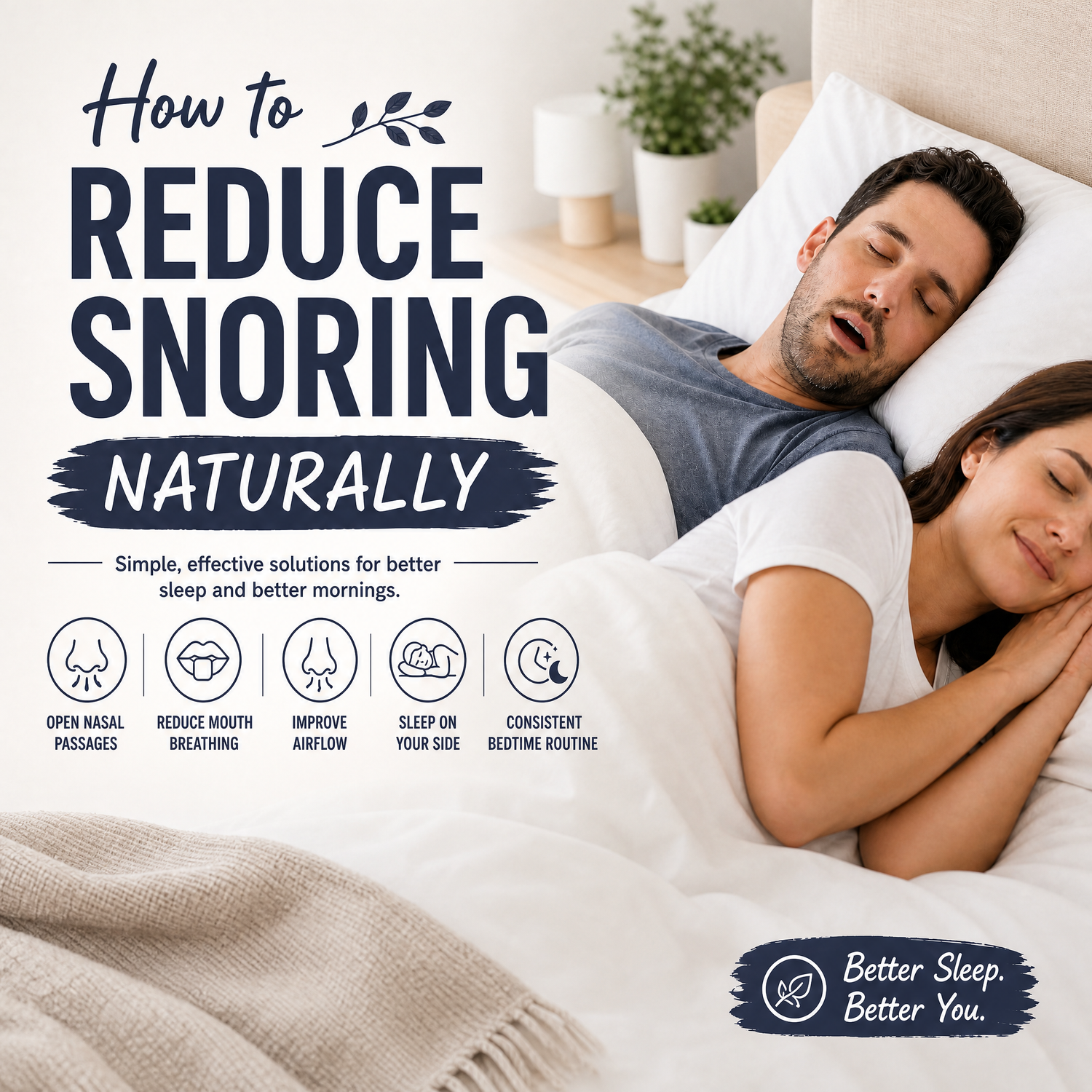
Snoring is more common than most people realise and more disruptive than many acknowledge. It affects the snorer's sleep quality directly (even if they're unaware of it) and frequently disrupts partners, leading to separate sleeping arrangements and the knock-on effects that follow.
The good news: for the majority of people, snoring has identifiable causes and responds well to non-invasive interventions. Here's what the evidence supports.
What Causes Snoring
Snoring occurs when airflow through the mouth or nose is partially obstructed during sleep, causing the surrounding tissues to vibrate. The sound is the vibration and the louder it is, the greater the obstruction.
Common causes include:
- Nasal congestion : Blocked nasal passages force mouth breathing, which is more prone to obstruction
- Sleep position : Back sleeping allows the tongue and soft palate to fall backward, narrowing the airway
- Mouth breathing : Bypasses the nasal airway and increases turbulence in the throat
- Excess weight : Fatty tissue around the neck compresses the airway
- Alcohol : Relaxes the muscles of the throat, increasing the likelihood of obstruction
- Anatomical factors : A deviated septum, enlarged tonsils, or a naturally narrow airway
Understanding which of these applies to you determines which interventions are most likely to help.
Switch to Nasal Breathing
This is the single most impactful change most snorers can make. Nasal breathing routes air through a narrower but more stable passage, reducing the turbulence that causes snoring. The nasal cavity also filters and humidifies air, reducing irritation in the throat.
If nasal congestion is preventing nasal breathing, address the congestion first. Nasal strips adhesive strips applied across the bridge of the nose gently open the nasal passages and are one of the most effective over-the-counter interventions for congestion-related snoring. They're non-medicated, non-habit-forming, and work immediately.
Mouth tape is a more direct approach: a small piece of breathable tape applied over the lips encourages nasal breathing throughout the night. It sounds counterintuitive, but it's well-tolerated by most people once they've confirmed their nasal passages are clear. Start with a small piece and work up to full coverage as you become comfortable.
Change Your Sleep Position
Back sleeping is the position most associated with snoring. When you lie on your back, gravity pulls the tongue and soft palate toward the back of the throat, narrowing the airway.
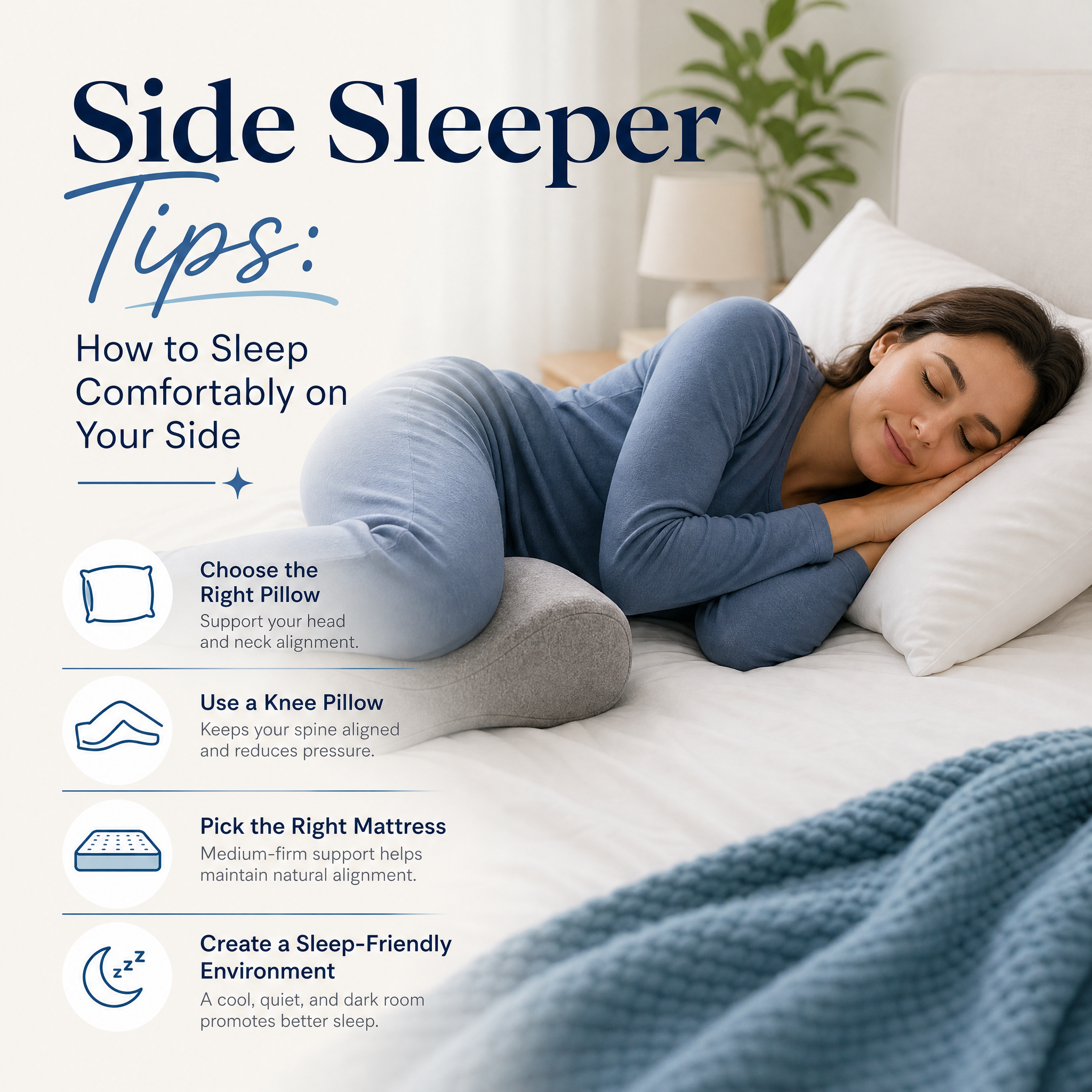
Side sleeping particularly on the left side keeps the airway more open. If you find yourself rolling onto your back during the night, a body pillow behind you can act as a physical barrier. Some people sew a tennis ball into the back of their pyjama top as a low-tech deterrent.
Reduce Alcohol Consumption
Alcohol relaxes the muscles of the upper airway, making obstruction more likely. Even moderate drinking in the evening significantly increases snoring frequency and intensity. If you drink, do so earlier and in smaller quantities or avoid it on nights when sleep quality matters.
Address Nasal Congestion
Chronic nasal congestion from allergies, a deviated septum, or environmental irritants is a major driver of mouth breathing and snoring. Practical steps include:
- Washing bedding weekly to reduce dust mite exposure
- Using an air purifier in the bedroom
- Keeping humidity between 40–60% (dry air irritates nasal passages)
- Rinsing nasal passages with a saline solution before bed
- Using nasal strips to mechanically open the airways
Maintain a Healthy Weight
Excess weight particularly around the neck compresses the airway and increases snoring risk. This isn't a quick fix, but it's one of the most durable ones. Even modest weight loss (5–10% of body weight) has been shown to reduce snoring severity in overweight individuals.
Elevate Your Head
Raising the head of your bed by 10–15cm or using a wedge pillow reduces the tendency of the tongue and soft palate to fall backward. This is a simple, low-cost adjustment that can make a meaningful difference, particularly for positional snorers.
When to Seek Medical Advice
Snoring that's accompanied by gasping, choking, or witnessed pauses in breathing may indicate obstructive sleep apnoea a condition that requires medical assessment. Sleep apnoea is associated with increased cardiovascular risk and should not be managed with lifestyle changes alone.
If you snore loudly and consistently, feel unrefreshed despite adequate sleep, or are told you stop breathing during the night, speak to your GP. A sleep study can confirm or rule out apnoea and guide appropriate treatment.
The Practical Starting Point
For most people, the highest-impact first steps are: switch to side sleeping, address nasal congestion with strips or saline rinse, and reduce evening alcohol. These three changes alone resolve or significantly reduce snoring in a large proportion of cases.
Snoring is not inevitable. It's a mechanical problem with mechanical solutions and most of them are straightforward.

Leave a comment
This site is protected by hCaptcha and the hCaptcha Privacy Policy and Terms of Service apply.